

LM-79 Initial Photometrics, LM-80 High-Temperature Aging, and TM-21 Lifespan Extrapolation Dynamics
Nov 02, 2026
Quantifying the operational lifespan and photometric performance of exterior LED luminaires requires standardized test methodologies developed by the Illuminating Engineering Society (IES). Positioned within the flexible linear accent tier of outdoor architectural fixtures, low-voltage LED strip systems deliver continuous perimeter framing, cove accentuation, and facade lighting across commercial property elevations. Operating across 12 V DC and 24 V DC power configurations, flexible linear strips rely on engineered thermal paths and protective silicone housings to preserve optical output across variable site conditions. Three interconnected IES standards-LM-79, LM-80, and TM-21-form the technical foundation for evaluating initial optical flux, diode thermal degradation, and long-term lumen maintenance projections across these linear product lines.
LM-79: Measuring the Finished Luminaire
IES LM-79 governs the electrical and photometric measurement of assembled outdoor luminaires. Testing occurs inside an integrating sphere or via a goniophotometer under controlled laboratory conditions maintained at a 25°C ambient temperature baseline. LM-79 test reports record total luminous flux in lumens, electrical power consumption in watts, system efficacy in lumens per watt, spatial intensity distribution curves, correlated color temperature (CCT), and color rendering index (CRI). Photometric data captured under LM-79 reflects baseline luminaire performance at time zero, recording the initial optical energy emitted by the integrated luminaire assembly.
Optical components integrated within flexible linear housing profiles alter initial LM-79 photometric efficiency compared to bare LED diodes. Encapsulated silicone profiles, protective clear covers, and internal diffuser layers absorb a fraction of raw diode lumen output, reducing overall luminaire efficacy. Internal electrical resistance within thin copper FPC traces causes localized voltage drop along extended flex circuits, reducing current flow to downstream LED chips. Consequently, absolute lumen measurements recorded in an LM-79 test report capture both optical absorption losses from physical encapsulation and resistive power losses across internal trace conductors under standardized 25°C operating parameters.
LM-80: Aging the LED Package
IES LM-80 governs the long-term lumen degradation testing of discrete LED packages, diode arrays, or COB modules rather than full assembled luminaires. LM-80 testing subjects diode samples to continuous operational current for a minimum of 6,000 hours, with extended testing reaching 10,000 hours preferred for higher predictive precision. Photometric measurements record lumen output at regular 1,000-hour intervals across three required case temperatures (Ts): 55°C, 85°C, and a third high temperature selected by the manufacturer, such as 105°C. The resulting data plots Ts-dependent lumen maintenance curves, exposing how continuous thermal stress degrades diode efficiency over extended operational periods.

Thermal stress at high case temperatures triggers physical degradation mechanisms within the LED semiconductor package. Sustained heat at 85°C or 105°C accelerates thermal darkening within the silicone encapsulant layer and causes crystal lattice defects inside the indium gallium nitride (InGaN) semiconductor layers. High operating temperatures also degrade the quantum conversion efficiency of the phosphor matrix, causing non-radiative electron recombination that converts electrical energy into heat instead of visible light. High-temperature LM-80 data at 85°C and 105°C quantifies these microscopic degradation rates, providing empirical decay curves for mathematical lifespan calculations.
TM-21: Projecting Lifespan from Data
IES TM-21 establishes the mathematical formula for extrapolating long-term L70 or L80 luminaire lifespans using empirical data gathered in LM-80 test reports. Component-level decay data collected under LM-80 does not directly equal total luminaire longevity, as physical luminaire enclosures alter operating temperatures. TM-21 applies an exponential curve-fitting algorithm to the LM-80 data corresponding to the luminaire's actual operating in-situ case temperature (Ts). In-situ thermal testing utilizes internal thermocouples attached directly to the diode solder joint while the assembled luminaire operates at thermal equilibrium in a 25°C ambient laboratory setting.
Extrapolation rules defined within TM-21 enforce a mathematical cap on reported lifespan projections to prevent unrealistic long-term claims. Projected lifespan designations cannot exceed six times the total duration of the actual LM-80 test. A 6,000-hour LM-80 test report permits a maximum TM-21 projected lifespan claim of 36,000 hours, whereas a 10,000-hour LM-80 test report enables a maximum projected claim of 60,000 hours. Standardized statistical metrics like L70B10 at 50,000 hours indicate that after 50,000 operating hours, at least 90% of a sample population retains 70% or more of initial lumen output.
Site Conditions Versus Laboratory Data
Site environmental conditions modify actual in-situ case temperatures, causing real-world lumen maintenance to diverge from standard 25°C laboratory projections. Exterior linear strips installed on unshaded building soffits or hot dark facades experience ambient air temperatures well above laboratory baselines during summer months. Elevated ambient heat reduces thermal dissipation from the FPC board, driving internal solder joint temperatures closer to the 85°C or 105°C LM-80 test limits. Conversely, low ambient winter temperatures accelerate thermal dissipation, lowering operating Ts levels and reducing phosphor degradation rates along active linear runs.

Circuit length dynamics and power feed configurations directly influence localized heat generation along low-voltage linear runs. A 12 V DC system operates at double the current draw of an equivalent 24 V DC system, resulting in higher localized current density near the power feed input. According to Joule's Law, resistive power loss scales quadratically with current, causing 12 V DC circuits to generate more internal heat within initial trace sections. Higher trace temperatures elevate local Ts readings near single-ended feeds, accelerating lumen decay at the head of the strip. Utilizing 24 V DC tracks reduces overall current load, maintaining lower operational temperatures and uniform Ts values across continuous 10-meter runs.
Mounting location, physical mounting forms, and submersion depth alter thermal dissipation pathways and environmental resistance requirements across the product range. Surface-mounted aluminum extrusion channels act as secondary heat sinks, conducting thermal energy away from the FPC copper track to reduce operational Ts values. Linear profiles installed in submerged IP68 aquatic environments benefit from liquid conductive cooling, which maintains low operating temperatures despite continuous current flow. Conversely, unencapsulated indoor flex strips installed outdoors suffer rapid moisture ingress, copper trace oxidation, and catastrophic solder joint failure when exposed to rain or salt fog, illustrating why exterior installations utilize IP65 or IP67 silicone profiles.
Construction Choices and the Full Picture
Alternative construction methods relying on passive resistor current limiting experience greater lumen degradation than active integrated circuit (IC) regulated strip architecture. Passive resistor designs allow driving current to fluctuate with supply voltage shifts and thermal variations, exposing LED diodes to localized current spikes that elevate junction temperatures. Strips incorporating active constant-current micro ICs maintain fixed current delivery to each diode group across fluctuating supply voltages. Controlled current input stabilizes operating case temperatures near optimal design targets, preserving photometric maintenance curves predicted by TM-21 mathematical models.
Integrating LM-79 photometric reporting, LM-80 component aging data, and TM-21 mathematical extrapolation provides an accurate framework for specifying long-term outdoor linear illumination. System performance relies on matching low-voltage constant-voltage drivers, high-density copper FPC substrates, and IP67 or IP68 silicone encapsulation to local ambient conditions and circuit lengths. Technical evaluation of initial flux, thermal decay limits, and mathematical projection limits keeps linear lighting systems at expected luminance levels across commercial property building outlines and landscape perimeters.
Related LED Neon Flex and Strips
COB Single Color LED Strip 320-528 LEDs/m IP20-IP68 12/24 V
2835 Single Color LED Strip 60-280 LEDs/m IP20-IP68 12/24 V
16x16 mm Front Emitting LED Neon Flex GM-F2835Y-120-X-IPX 12/24 V
For LM-79, LM-80 and TM-21 specification files, photometric data or a project quotation, send your site layout and mounting details through Contact Us.
Background on how we build and test exterior luminaires: About Us.
This guide on LM-79, LM-80 and TM-21 was updated in October 2026 for commercial and hospitality exterior projects.
You Might Also Like
-

WAJTS-176-F72 High Power LED Flood Light 288 W DC 24 V IP65
-

TL-DMD-G1802 In-ground Light 36 W IP67 Polarized
-

HYD-2025G LED Mini Underwater Pool Inground Light 0.2 W IP68
-

660306 LED Underwater Spot Pool Light 6 W 316 SS IP68
-

GAS2402A-1000 Bollard Light 16 W IP65 Die-Cast Aluminum
-
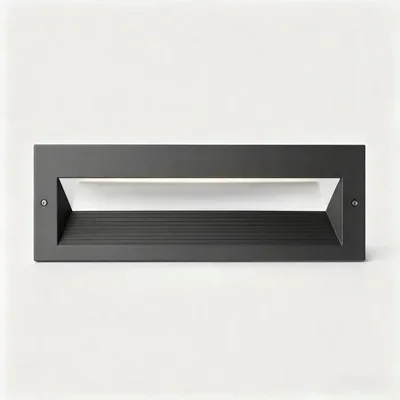
GAS3076 Recessed LED Wall Light 30 W IP65 Die-Cast Aluminum