

Commercial Underwater Lights Specification Guide
Nov 02, 2026
Six months after the commissioning of a commercial plaza fountain, half of the submerged luminaires begin to flicker and show internal condensation behind the tempered glass. Upon draining the basin, the maintenance crew discovers rusted bezel screws, degraded cable glands, and waterlogged junction boxes. The specified fixtures carried an ingress rating suitable for splash zones rather than continuous pressurized immersion, and the housing alloy was incompatible with the bromine and chlorine dosing system used to treat the water. Replacing the failed units requires breaking into the cured waterproofing membrane of the basin, turning a minor component failure into a major structural remediation.
Submerged lighting installations leave zero margin for specification error. Unlike landscape fixtures that experience intermittent rain, underwater lights operate in a hostile, pressurized electrolyte that exploits any microscopic flaw in material composition, gasket compression, or cable termination. For contractors and specifiers preparing commercial schedules, preventing water ingress and galvanic corrosion demands a rigorous evaluation of housing metallurgy, seal mechanics, low-voltage distribution architecture, optical refraction in water, and physical mounting sequences before concrete is poured.
Material Selection and Housing Metallurgy
Water chemistry dictates the base material of any submerged luminaire. Even potable water becomes conductive and corrosive once exposed to atmospheric gases, organic debris, and chemical sanitizers. Specifying the wrong alloy leads to rapid pitting, crevice corrosion, and structural failure of the luminaire body before the LED light source reaches a fraction of its rated lifespan.
- 304 Stainless Steel: Contains roughly 18 percent chromium and 8 percent nickel. It performs adequately in untreated freshwater features with neutral pH levels and continuous circulation. However, in the presence of chlorides or bromides, the passive chromium oxide layer breaks down rapidly, leading to localized pitting around gasket grooves and fastener threads.
- 316 and 316L Stainless Steel: Incorporates 2 to 3 percent molybdenum, which substantially increases resistance to chloride-induced pitting and crevice corrosion. The low-carbon variant (316L) minimizes carbide precipitation during welding or high-temperature forming. It is the baseline specification for chlorinated swimming pools, decorative fountains with chemical dosing, and brackish water installations.
- Cast Bronze and Brass: Marine-grade bronze alloys offer exceptional resistance to biofouling and high-salinity environments, including seawater pools and coastal water features. While heavier and more costly to machine than stainless steel, bronze housings resist structural degradation in harsh chemical conditions where stainless steel requires supplementary sacrificial protection.
- Surface Passivation and Electropolishing: Regardless of the stainless steel grade selected, mechanical machining leaves microscopic iron particles embedded in the surface and creates microscopic peaks and valleys. Specifiers should require chemical passivation and electropolishing. Electropolishing removes surface irregularities, strips away free iron, and enriches the surface chromium layer, depriving corrosive agents of initiation sites.
- Galvanic Isolation: When dissimilar metals make electrical contact inside an electrolyte (the water basin), a galvanic cell forms, causing the less noble metal to corrode rapidly. If a 316L stainless steel fixture is secured with lower-grade fasteners or mounted directly against carbon steel reinforcement bars within the concrete wall, accelerated corrosion occurs. Specifications must mandate matching 316L fasteners and non-conductive polymer mounting sleeves to isolate the luminaire body from structural rebar.
The 316L baseline is met by the recessed pool body 316SS-0402 (8 W, 24V DC, IP68), built in 316 stainless steel for continuous immersion.
Ingress Protection and Where Water Enters
An IP68 rating on a submittal sheet is not a universal pass for all submerged applications. The test depth and duration behind IP68 are set by the supplier, so the two digits say nothing until the depth rating is stated. A fixture qualified for a shallow basin is not automatically qualified for the floor of a deep well or for a nozzle head, where pressure and velocity are higher. Specifiers must verify the continuous immersion depth rating and the duration it is rated for, rather than relying on the two-digit IP code alone.
Understanding how water penetrates a submerged housing is essential for evaluating fixture construction. Water seldom pushes straight through a compressed face gasket under static conditions; instead, it enters through dynamic pressure changes and capillary paths.
- Thermal Siphoning (Wicking): When a submerged luminaire operates, the LED engine generates heat, causing the internal air volume to expand and increase in pressure. When the fixture is switched off, the water rapidly cools the housing. The internal air contracts, creating a partial vacuum inside the luminaire body. This negative pressure attempts to equalize by drawing water in through the path of least resistance - almost always through the microscopic voids between the copper strands of the power cable or past the outer jacket inside the cable gland.
- Anti-Wicking Cable Water-Blocks: To defeat thermal siphoning, an outer compression gland alone is insufficient. Commercial underwater luminaires require an internal water-block. This involves stripping a section of the outer cable jacket and individual conductor insulation inside the fixture housing, soldering or crimping onto a solid brass or copper block, and encapsulating the transition in hydrophobic epoxy or polyurethane potting resin. If the outer cable is severed or nicked underwater, the potted barrier prevents water from migrating up the copper strands into the LED chamber.
- Gasket Compression and Elastomer Chemistry: Standard nitrile (NBR) or neoprene gaskets degrade rapidly when exposed to pool chlorine, ozone, and ultraviolet radiation from the water surface. Underwater fixtures must utilize molded silicone or fluorocarbon (FKM/Viton) gaskets. Furthermore, the housing design must incorporate mechanical stops so that tightening the bezel screws applies uniform compression without crushing or extruding the elastomer out of its seat.
- Cable Jacket Compatibility: Standard PVC cables harden, crack, and leach plasticizers when submerged in chemically treated water. Specifications should stipulate H07RN-F heavy-duty polychloroprene (neoprene) rubber cables or specialized polyurethane (PUR) jackets rated for continuous immersion in chlorinated or saline water.
Electrical Safety, Voltage Drop, and Thermal Management
Combining electricity and water requires strict adherence to electrical safety codes regarding Safety Extra-Low Voltage (SELV). Submerged luminaires in commercial basins must operate at safe low voltages - typically 12V DC or 24V DC. Operating at these levels ensures that even in the event of a catastrophic housing breach and severed cable, the electrical potential dissipated into the water cannot cause lethal ventricular fibrillation in swimmers or maintenance personnel.
- Driver Location and Isolation: Power supplies and LED drivers must be installed in dry, ventilated plant rooms or elevated above the high-water mark in weatherproof enclosures at a code-mandated horizontal distance from the basin edge. The drivers must feature galvanic isolation between the primary mains input and the secondary low-voltage output, preventing mains voltage from bridging into the secondary circuit during a surge or transformer fault.
- Managing Voltage Drop: Because underwater lights require remote power supplies, cable runs from the plant room to the basin niches are often extensive. At 12V DC or 24V DC, current draw is high for a given wattage, making voltage drop a primary engineering challenge. For example, a 24W fixture operating at 12V draws 2 amperes; over a 30-meter cable run using 1.5 mm2 conductors, the voltage drop will cause noticeable dimming or prevent the internal constant-current regulators from striking. Specifiers should favor 24V DC systems over 12V DC wherever local electrical codes permit, as doubling the voltage halves the current and reduces voltage drop by a factor of four for the same cable cross-section.
- Star vs. Daisy-Chain Topology: Underwater connections are major failure points. Daisy-chaining fixtures underwater using submerged T-connectors multiplies the number of seals subject to hydrostatic pressure. The preferred commercial architecture is a home-run (star) topology, where each luminaire is supplied with a permanently sealed cable tail long enough to reach a dry deck box or above-water junction chamber without underwater splices.
- Thermal Cutoff and Dry-Run Protection: High-output underwater LED luminaires rely on the surrounding water as an infinite heatsink to conduct thermal energy away from the housing. If a fountain is drained for cleaning while the lighting circuit remains energized, a fixture designed solely for wet operation will overheat within minutes, destroying the LED phosphor and charring the internal potting compound. Specifications must verify whether the luminaire is rated for wet-only or wet/dry operation, and require an integrated negative temperature coefficient (NTC) thermistor on the LED board that automatically throttles current if the housing temperature exceeds safe limits.
Optics, Refraction, and Wattage Against Water Depth
Photometric behavior changes when light transitions from an internal air cavity, through a glass lens, and into water. Because water has a higher refractive index (approximately 1.33) than air (1.00), light rays exiting a flat glass lens bend toward the normal line. Consequently, a luminaire that produces a 35-degree beam angle when tested in dry air will project a narrower beam - roughly 25 to 26 degrees - when submerged. Specifiers reviewing standard IES files must account for this optical narrowing or request wet-calibrated photometric data from their supplier.
Water also attenuates light through absorption and scattering at a much higher rate than air. Dissolved minerals, suspended particulates, and air bubbles entrained by fountain nozzles scatter short-wavelength blue light and absorb longer red wavelengths. Matching wattage, lumen package, and beam angle to the water column height and basin finish is critical for achieving uniform illumination without creating blinding surface glare.
- Shallow Reflective Pools and Rills (0.2m to 0.6m depth): Shallow basins often feature dark granite or slate tiles intended to create a mirror effect on the water surface. High-wattage fixtures placed in shallow water create intense hot spots that break the surface reflection and blind pedestrians looking down into the basin. Specify low-wattage fixtures (3W to 9W) with wide symmetric beams (60 to 90 degrees) or asymmetric wall-grazing optics mounted horizontally into the side walls to wash the basin floor gently.
- Commercial Swimming and Leisure Pools (1.0m to 2.5m depth): General basin illumination requires throwing light horizontally across the width of the pool while minimizing direct glare for swimmers. Wall-mounted luminaires should be positioned 400mm to 600mm below the normal water level, utilizing wide horizontal fan beams or diffused lenses. Typical power levels range from 18W to 36W per fixture, spaced at 2.5-meter to 4-meter intervals depending on the reflectance of the pool interior finish. Dark plaster or tiled pools absorb up to three times more light than white marbelite surfaces, requiring tighter spacing rather than simply increasing individual fixture wattage.
- Deep Plunge Pools and Diving Wells (2.5m to 5.0m+ depth): At depths exceeding 2.5 meters, water absorption becomes pronounced. Luminaires require higher lumen output (36W to 60W+) and medium beam angles (25 to 40 degrees) to push light across the basin floor. Ensure the luminaire housing and mechanical seals are explicitly rated for the hydrostatic pressure at the bottom of the well (0.5 bar at 5 meters).
- Vertical Fountain Jets and Aerated Plumes: Illuminating a vertical column of water requires placing the luminaire directly beneath or immediately adjacent to the nozzle exit. Because aerated water (whitewater) is filled with millions of micro-bubbles that scatter light rapidly, narrow spot optics (10 to 15 degrees) and high intensity (24W to 50W) are needed to punch up through the core of the plume. As the water column breaks into droplets at the apex, the scattered light illuminates the falling curtain.
- Correlated Color Temperature (CCT): In clear water over white or light blue tiles, 4000K to 5000K enhances the crisp, aquatic appearance of the basin. However, in stone-lined architectural fountains, 2700K or 3000K prevents travertine, sandstone, or bronze sculptures from appearing washed out and clinical at night.
Where a plume or a deep basin needs more output, the fountain unit HYD-6380 (60 W, IP68) covers the high end of that range.
Mounting Details in Pool Walls and Water Features
The physical interface between the underwater luminaire, the structural concrete shell, and the waterproofing membrane determines both the visual integration of the fixture and the long-term watertight integrity of the basin. Coordinating mounting hardware with the civil and waterproofing contractors must happen during the structural design phase.
- Recessed Niche Mounting: For swimming pools and smooth-walled basins where protruding fixtures pose an impact hazard to swimmers, recessed installation is mandatory. A two-part system is used: a structural mounting sleeve (niche) is cast into the shotcrete or poured concrete wall during civil works, and the luminaire body is inserted into the sleeve during final electrical fit-out. The mounting sleeve must feature an integrated puddle flange or clamping ring that allows the waterproofing contractor to seal the flexible tanking membrane directly onto the sleeve body before tiles or render are applied.
- Cable Coiling and Serviceability: Draining a commercial pool to replace a single luminaire or driver is operationally disruptive and expensive. Recessed niches must be sized with sufficient internal volume behind the fixture body to store 1.5 to 2.0 meters of coiled slack cable. This allows maintenance technicians to unscrew the fixture bezel while the pool remains full, pull the luminaire up onto the dry pool deck for inspection or replacement, and re-install it without disturbing the dry-side cable termination.
- Conduit Routing to Deck Boxes: The conduit linking the back of the recessed niche to the above-water junction box must be rigid PVC or stainless steel, installed with wide-radius sweeps rather than sharp 90-degree elbows so the heavy rubber cable can be pulled through during replacement. The conduit remains flooded with basin water up to the waterline (hydrostatic equilibrium); therefore, the deck box must be positioned at least 300mm above the maximum overflow level of the basin to prevent water from spilling into the dry electrical splice chamber.
- Surface Bracket and Nozzle-Ring Mounting: In decorative fountains where public access into the basin is prohibited, surface-mounted adjustable spotlights or center-hole ring lights are standard. Ring lights slip directly over the vertical standpipe of the fountain nozzle, allowing the water jet to pass through the center of the luminaire array for coaxial illumination. Surface-mounted fixtures must use heavy-duty 316L stainless steel or bronze yoke brackets with serrated locking teeth so the hydrodynamic force of circulating water does not push the fixture out of alignment over time.
Basins that cannot be recessed take a surface bracket instead: the HYD-4215 (18 W, IP68) fixes to the wall face without a niche.
Control Systems and Dynamic Water Feature Integration
Architectural water features frequently serve as focal points in commercial plazas and hospitality developments, requiring dynamic color changing or synchronized water-and-light choreography. Integrating control protocols into submerged fixtures introduces additional conductors and thermal constraints that must be managed at the specification stage.
- DMX512 and RDM Architecture: For kinetic fountains and color-changing RGBW basins, DMX512 is the standard control protocol because of its high refresh rate and frame-by-frame synchronization capabilities with variable-frequency pump drives and solenoid valves. Remote Device Management (RDM) is highly recommended for underwater installations; it allows the commissioning engineer to set DMX addresses and monitor fixture temperature and status remotely from the control room, eliminating the need to physically access submerged units to change addressing dip-switches.
- Cable Conductor Count and External Decoders: Integrating a DMX decoder directly inside a small underwater fixture increases internal heat generation and requires a multi-core hybrid cable (combining two heavy-gauge power conductors with a twisted shielded data pair) passing through the waterproof gland. For compact fixtures (under 15W), a cleaner engineering approach is to house multi-channel constant-voltage or constant-current DMX decoders in the dry plant room alongside the power supplies, running simple 5-core (RGBW + Common) power cables out to the submerged luminaires.
- DALI-2 and Static Dimming: For hospitality pools and tranquil reflection basins where static white light only needs to transition between evening and late-night dimming scenes, DALI-2 or 0-10V dimming managed at the remote driver enclosure is the most reliable architecture. Keeping all control electronics in the dry service room maximizes the reliability of the submerged optical head.
Colour-changing basins use the RGB recessed unit DAY05OIL0001EU (3 W, IP68) in place of a fixed-white head.
Salt Mist Resistance
Luminaires installed in coastal resorts, thalassotherapy pools, and saltwater chlorination basins face aggressive chloride attack both beneath the waterline and in the splash zone immediately above it. Saltwater chlorinators generate sodium hypochlorite via electrolysis, maintaining a continuous NaCl concentration of 3,000 to 5,000 ppm in pool water, while natural seawater basins approach 35,000 ppm. Under these conditions, standard metallic finishes pit, delaminate, and seize within months.
Specifications for saline environments must mandate marine-grade 316L stainless steel with an electropolished surface or solid cast bronze housings; painted or powder-coated aluminum housings must never be submerged or placed in salt-spray zones, as chloride ions penetrate microscopic coating pores and cause rapid filiform corrosion beneath the finish. Additionally, because stagnant water trapped between the fixture housing and the mounting niche becomes oxygen-depleted and acidic, sacrificial zinc or magnesium anodes should be bonded to the metallic niche assembly to divert galvanic oxidation away from the luminaire body.
Submittal Files
A thorough commercial lighting specification requires comprehensive technical verification prior to procurement approval. To support engineering review, luminaire scheduling, and compliance verification by project consultants, we compile a complete documentation package tailored to your schedule. The following technical submittal files are issued per project on request:
- Product Datasheet detailing alloy composition, immersion depth limits, electrical parameters, and mechanical dimensions.
- IES File providing photometric distribution curves for lighting design calculations.
- IP Test Report verifying dust and pressurized water ingress protection to IP68 parameters.
- LM-80 Data documenting lumen maintenance and chromaticity stability of the LED package.
- Certificate of Conformity confirming compliance with applicable electrical and safety directives.
Matching Products: Underwater Lights / Inground Lights / Step Lights / Outdoor Strip Lights / Wall Washer Lights / Spot Lights / Bollard Lights / Wall Lights / Flood Lights
Preparing a schedule for a commercial pool, fountain, or architectural water feature? Send us your basin drawings, mounting details, and fixture quantities for a technical review and project quotation. Contact Us to discuss your specification requirements and request your project submittal package.
You Might Also Like
-
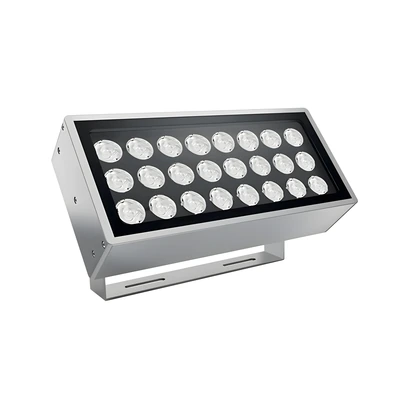
WAJTS-176-F24 High Power LED Flood Light 96 W DC 24 V IP65
-

TUL-C Bollard Floodlight UV Mosquito 50-250 W IP66 Aluminum
-

BL-BO16010E-600 Bollard Light 10 W IP65 Die-Cast Aluminum
-
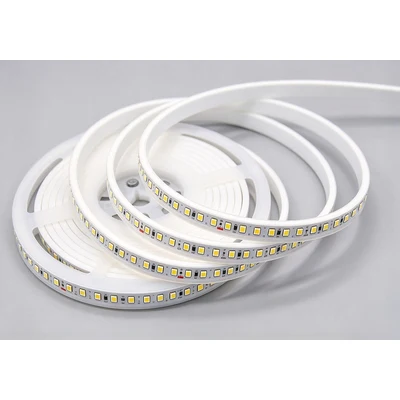
5x15 mm Front Emitting LED Neon Flex GM-H2835Y-120-X-IPX ...
-
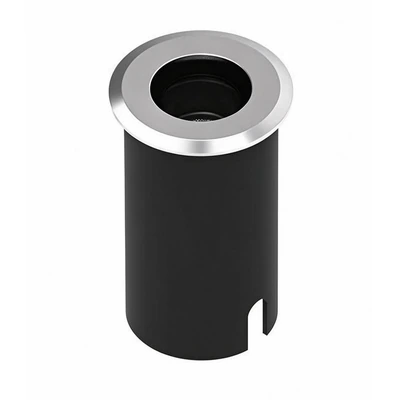
TL-DMD-K0105 Small Round In-ground Light 5 W IP67
-

Bevel LED Wall Washer TL-XQD-N1801 18-48 W Selectable Beam